MPV Validation:
Operational Insights
Healthcare executives are under mounting pressure to make high-stakes operational decisions—around staffing, throughput, and resource allocation—while navigating increasingly complex obstacles. Many organizations rely on fragmented data systems, manual processes, and retrospective reporting.
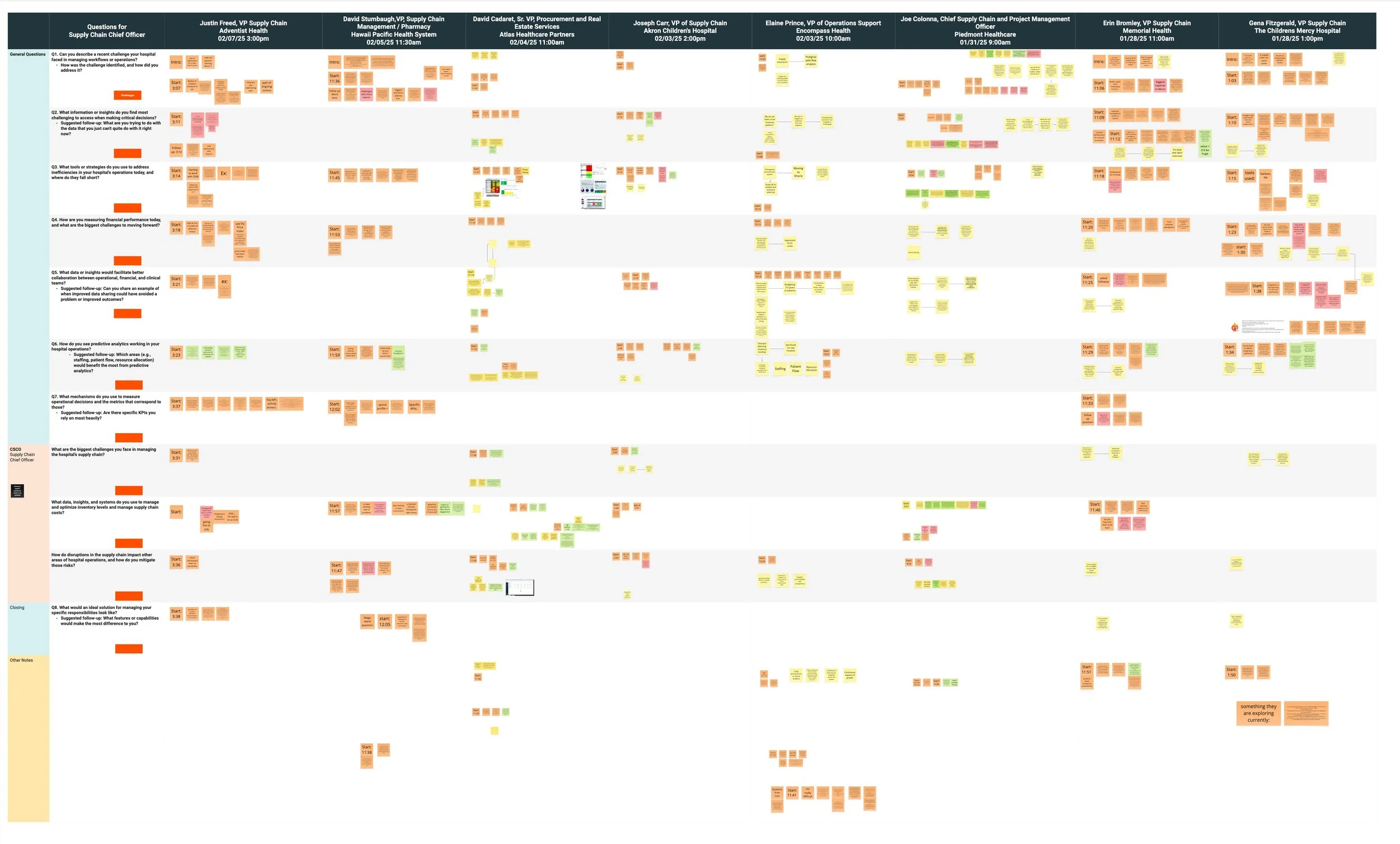
By conducting 17 in-depth scenario-based interviews with C-suite and senior operational stakeholders, I sought to surface the pain points slowing progress and reveal the operational levers with the greatest potential for innovation. The goal was to uncover not just what healthcare leaders said they needed, but what operational levers truly enable success- and how those levers could inform future product development at Vizient.
This project was a collaborative effort between myself, the Director of Product Discovery, and key internal stakeholders of the Operational Insights team, including the AVP, Product Director, and Product Owner.

What We Were Researching
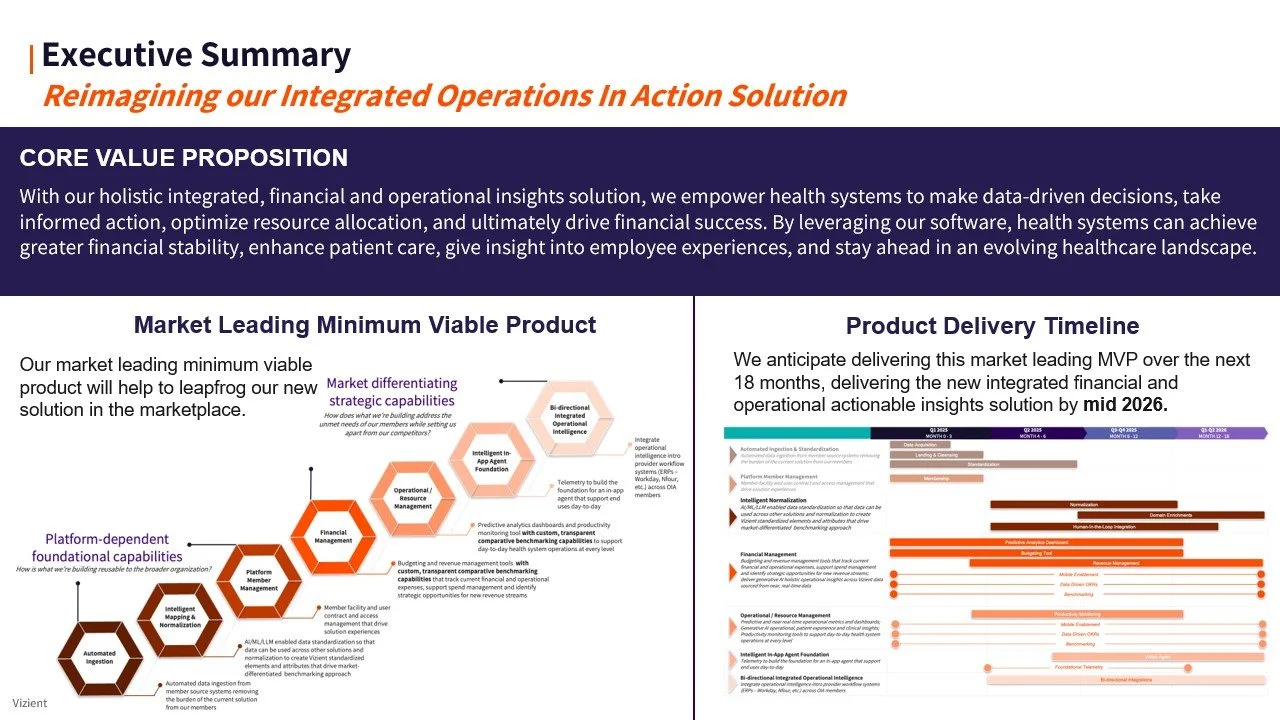
The operational insights team internally ideated a robust set of capabilities to address operational challenges. Our goal was to investigate the underlying hypotheses and assumptions that informed their current product strategy, (in)validating a specific set of MPV capabilities.
To test whether a more integrated, real-time solution could address these challenges, we framed scenario-based research questions to understand the way hospital executives:
Improve Operational Efficiency – Identify bottlenecks in workflows, leading to cost savings and productivity gains.
Enhance Financial Performance – Use detailed financial data to improve budget allocation, reduce expenses, and strengthen revenue cycle management.
Optimize Staffing Levels – Balance workforce planning with patient care needs to reduce burnout while controlling labor costs.
Benchmark Against Peers – Compare performance against similar institutions to highlight gaps and investment opportunities.
Reduce Patient Wait Times – Uncover inefficiencies causing delays, improving patient satisfaction.
Predict Admission Trends – Forecast capacity needs with data-driven models for better resource planning.
Enhance Regulatory Compliance – Identify compliance risks early, minimizing penalties and governance gaps.
Improve Patient Outcomes – Link operational efficiency with clinical outcomes to drive value-based care.
Identify Revenue Leakage – Detect billing errors or missed charges to safeguard financial performance.
Drive Planning & Growth – Leverage data insights to inform long-term strategy, including service expansion and partnerships.

What I Did
As the lead researcher on the Operational Insights initiative, I was responsible for shaping and executing the end-to-end research program. My contributions included:
Designed and Led Executive Research
Leading script-writing workshops with the Operational Insights AVP, Product Director, and Product Owner to identify knowledge gaps, set research objectives, and create persona-specific interview scripts.
Developed a scenario-based interview protocol tailored for C-suite leaders, enabling conversations that moved beyond surface-level feedback to uncover strategic pain points and operational realities.Facilitated 17 High-Stakes Interviews
Conducted in-depth sessions with senior executives across diverse health systems, building trust quickly and capturing candid insights about challenges in workforce management, throughput, financial governance, and technology adoption.Synthesized Complex Stakeholder Perspectives
Analyzed raw interview data into clear thematic insights, identifying where strategic ambition was undermined by fragmented systems, retrospective reporting, and misaligned execution pathways.Framed Opportunities for R&D
Translated qualitative findings into actionable opportunity areas that could guide the R&D pipeline—such as predictive forecasting, orchestration capabilities, and trustworthy AI adoption frameworks.Delivered Executive-Ready Artifacts
Produced a concise findings report and visual frameworks that connected stakeholder needs to product direction, equipping leadership with both clarity and confidence in prioritization decisions.
Outcome
The research resulted in a clearly defined roadmap for a reimagined operational analytics platform with user-validated features and functionality delivering significant impact:
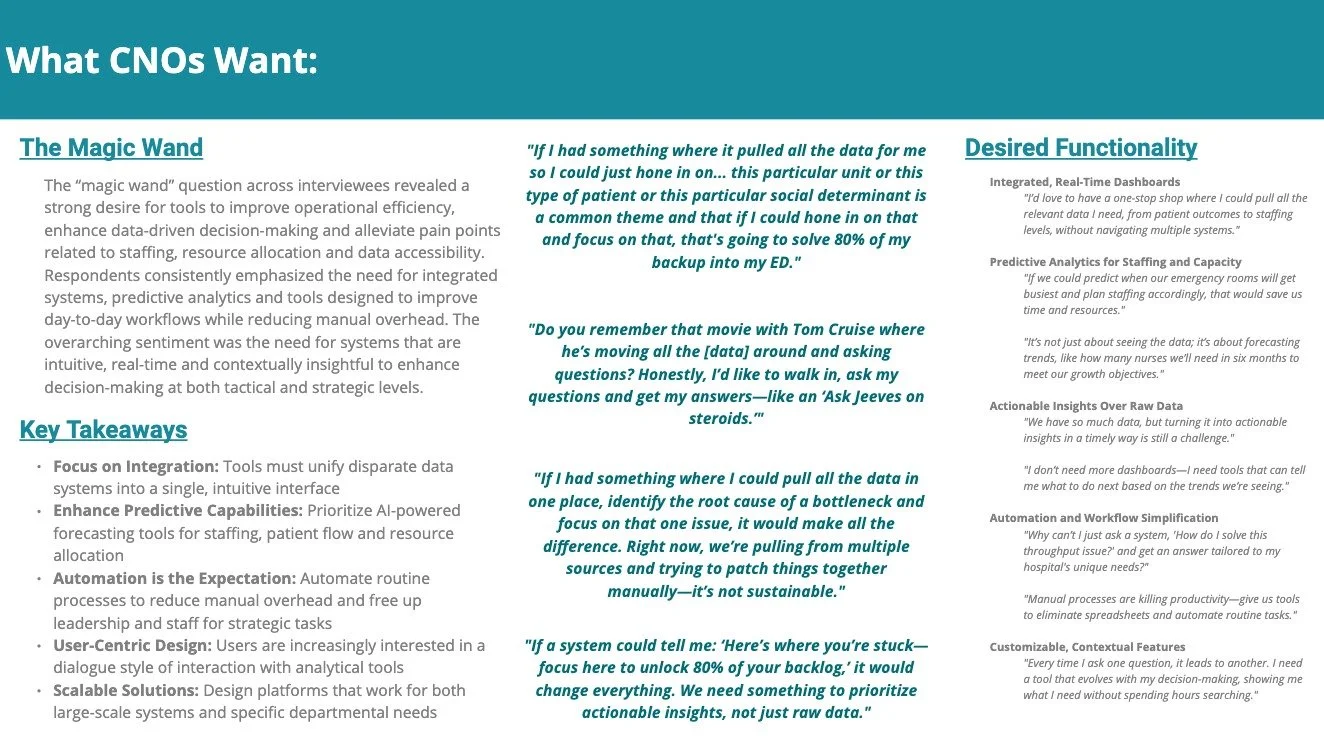
Elevated Product Vision – Insights directly shaped the core value proposition and MVP capabilities, ensuring they addressed executives’ most urgent needs: scenario-based forecasting, operational orchestration, and trustworthy AI adoption.
Prioritized R&D Pipeline – Findings helped leadership deprioritize lower-value hypotheses and concentrate investment on predictive and integrative tools that would drive measurable operational impact.
Executive Alignment – Delivered a clear narrative and visual frameworks that built consensus across internal stakeholders and resonated with C-suite leaders, accelerating buy-in for the solution roadmap.
Organizational Confidence – Equipped the R&D team with evidence-based insights to make strategic decisions faster and with greater conviction.
Together, these findings translated into actionable opportunities for the R&D pipeline: prioritizing development of predictive and orchestration-driven tools, validating trust in AI, and reframing value propositions around adaptability and execution speed.

Portfolio Highlights
-

Fitted
Solo practice user interface design for a responsive web and native app. An intuitive workout experience that motivates busy people to reach their health goals. goes here
-
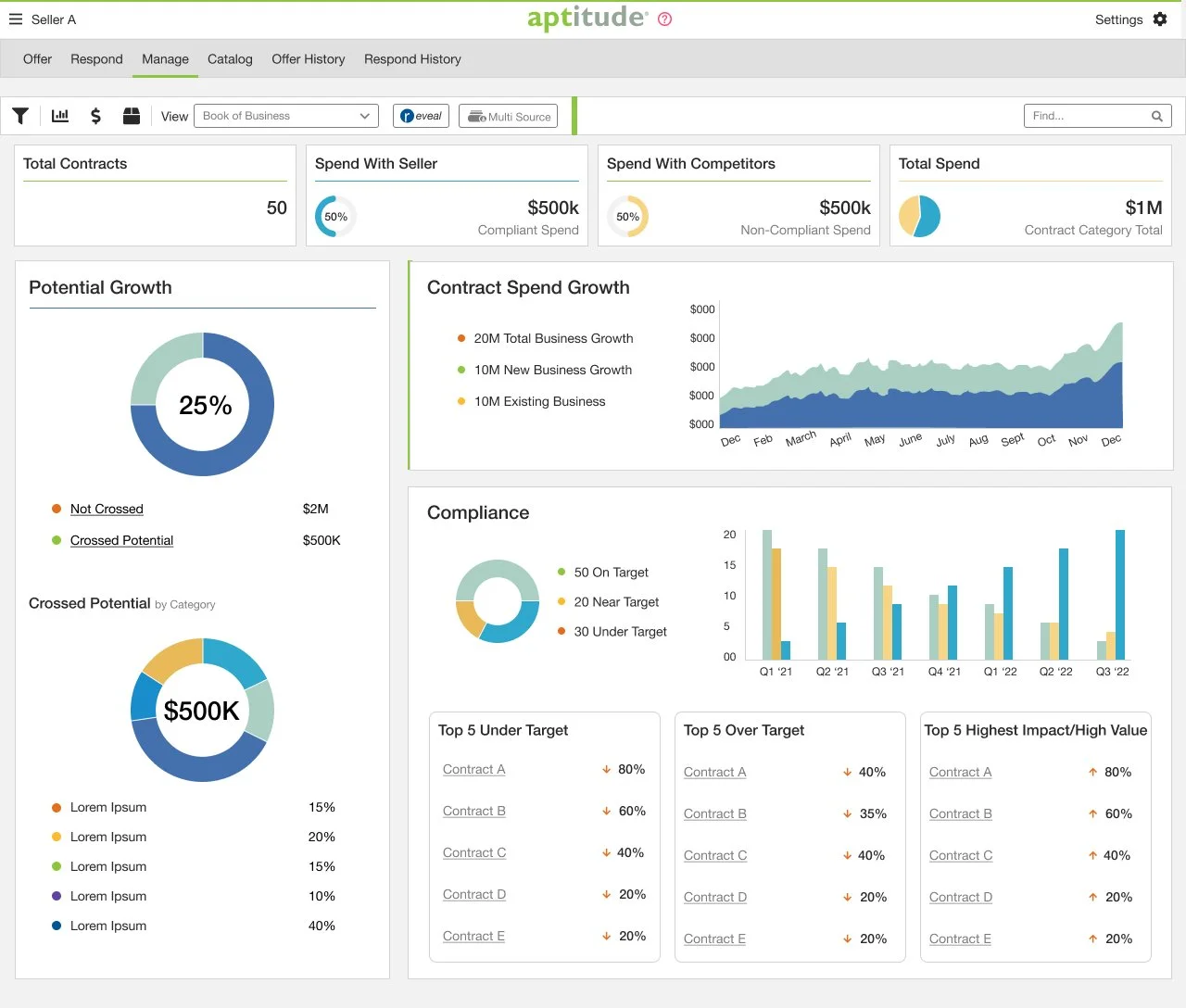
Aptitude Book of Business
Helping supply chain officers, account managers, and suppliers understand their supply chain performance, risks, and opportunities. Researched, designed, and validated a high-performance analytics dashboard in a multi-billion-dollar supply chain marketplace. User interviews, user interface design, and usability testing.
-

Museum of Art Membership Experience
A reimagined membership experience based on large scale surveys, interviews, and data analysis aimed at addressing a consistent business challenge: low membership retention. Created a plan in to increase program revenue, donation forecasting, and member satisfaction based on data-backed user journies and program features.